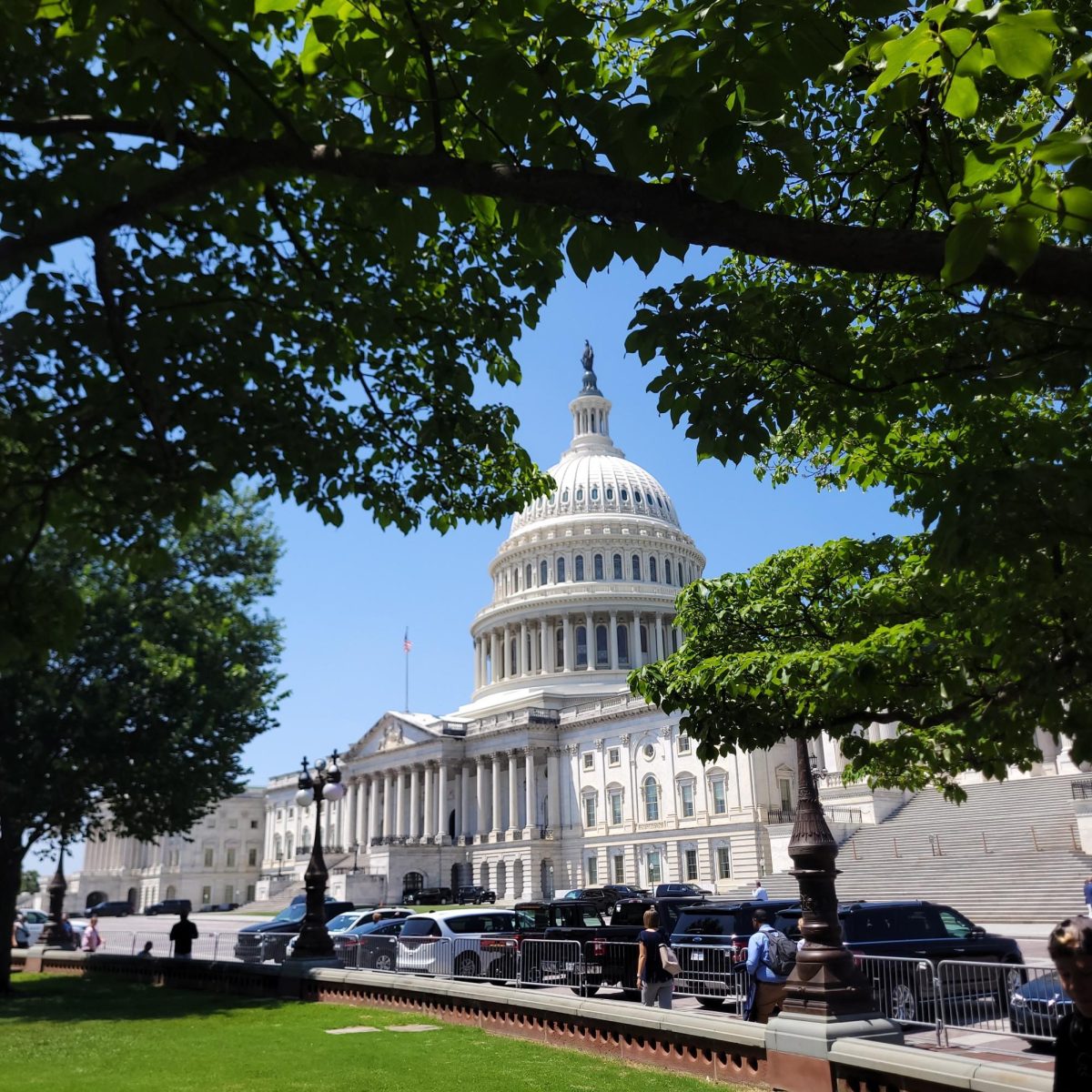
On November 12th, the longest government shutdown in United States history ended after 43 days. If the shutdown ended on November 12th and lasted 43 days, that means that it started on October 1st. This may seem like a random date, but it’s not. In the United States government, both chambers of Congress must approve a spending bill to send to the president. This bill must be passed by the start of the fiscal year, which is October 1st and lasts until September 30th of the following calendar year. If the bill doesn’t get passed, Congress will attempt to pass a continuing resolution, a temporary piece of legislation that authorizes government spending based off of the prior year’s budget. Congress tried to pass a continuing resolution, but it never got past the Senate. The recent government shutdown was a serious concern to many Americans, and it showcased the growing bipartisan conflict in the federal government right now. Furthermore, the nature of this shutdown is quite complicated. What caused the government to shut down? Well, that’s obvious; Congress couldn’t pass a spending bill in time. Why the bill couldn’t get passed, and the reason it caused so much turmoil is rooted in the major divide in Congress. The core conflict between Congressional Republicans and Democrats was over health insurance subsidies. Democrats pushed for permanent extensions on enhanced Affordable Care Act (ACA) tax credits; tax credits that lower healthcare premiums for low-income Americans to almost $0. Republicans on the other hand, believed that healthcare was a separate issue and should be negotiated outside of a funding bill.
Neither side was looking to compromise on ACA subsidies. Continuing Resolutions were passed through the Republican controlled House of Representatives but couldn’t get passed the Senate because Republicans only had 53 seats and need 60 votes to pass a bill. Once October 1st rolled around, the government was legally required to shut down. The consequences of the shutdown were immediate and substantial. At least 670,000 government workers were furloughed, and another 730,000 “essential workers” continued working without pay. The effects also extended past government employees; funding for Supplemental Nutrition Assistance Program (SNAP) benefits expired on November 1st leaving roughly 42 million Americans without the food stamps they needed. Thousands of flights were cancelled across the country because there were less air traffic control workers, the nation’s economic output dropped by billions as the economy took a hit, and heating subsidies provided by LIHEAP (Low-Income Home Energy Assistance Program) wouldn’t become available to the 6 million people that used them. As the daily lives of American citizens began to become more and more effected, the pressure on Congress to find a solution to the shutdown grew. There was political rhetoric coming from both sides. Congressional Democrats said that Republicans could reopen the government if they really wanted to because they controlled both chambers of Congress and all they need to do was get rid of the filibuster, a Senate rule that allows one person to occupy the floor as long as they want It has now become a loophole that enables a party to be able to force a 60-vote majority to be necessary, instead of a 51-vote majority to pass a bill. This was significant during the recent shutdown because Republicans controlled 53 Senate seats and could have been able to pass a bill by themselves if only 51 votes were required.
Congressional Republicans argued that Democrats were the ones prolonging the shutdown by insisting on tying healthcare policy to a very important funding bill. Senate Republicans also refused to remove the filibuster saying it was an essential part of the Senate system. President Trump, eager to end the shutdown even called for the filibuster’s removal. The shutdown would ultimately end the way most others do; with a compromise that didn’t satisfy either party. Eight Senate Democrats broke rank and voted for a continuing resolution that would temporarily fund and reopen the government. The bill that was signed into law would fund SNAP benefits until September 30th, 2026, the end of this fiscal year. What the bill lacked was extensions on ACA subsidies, which was the issue that originally sparked conflict in Congress. The Democrat Senators that voted to reopen the government were widely criticized by their party peers who said that they bent to Trump’s will and that they gave up without getting what they originally fought for. Over the 43 days the government was shut down, the deep divide in U.S politics became clear. While a compromise was reached, it left both sides frustrated and left disputes unresolved. U.S. citizens felt many of the consequences of the shutdown; acting as a harsh reminder of the real-world effects of the actions made in D.C.