



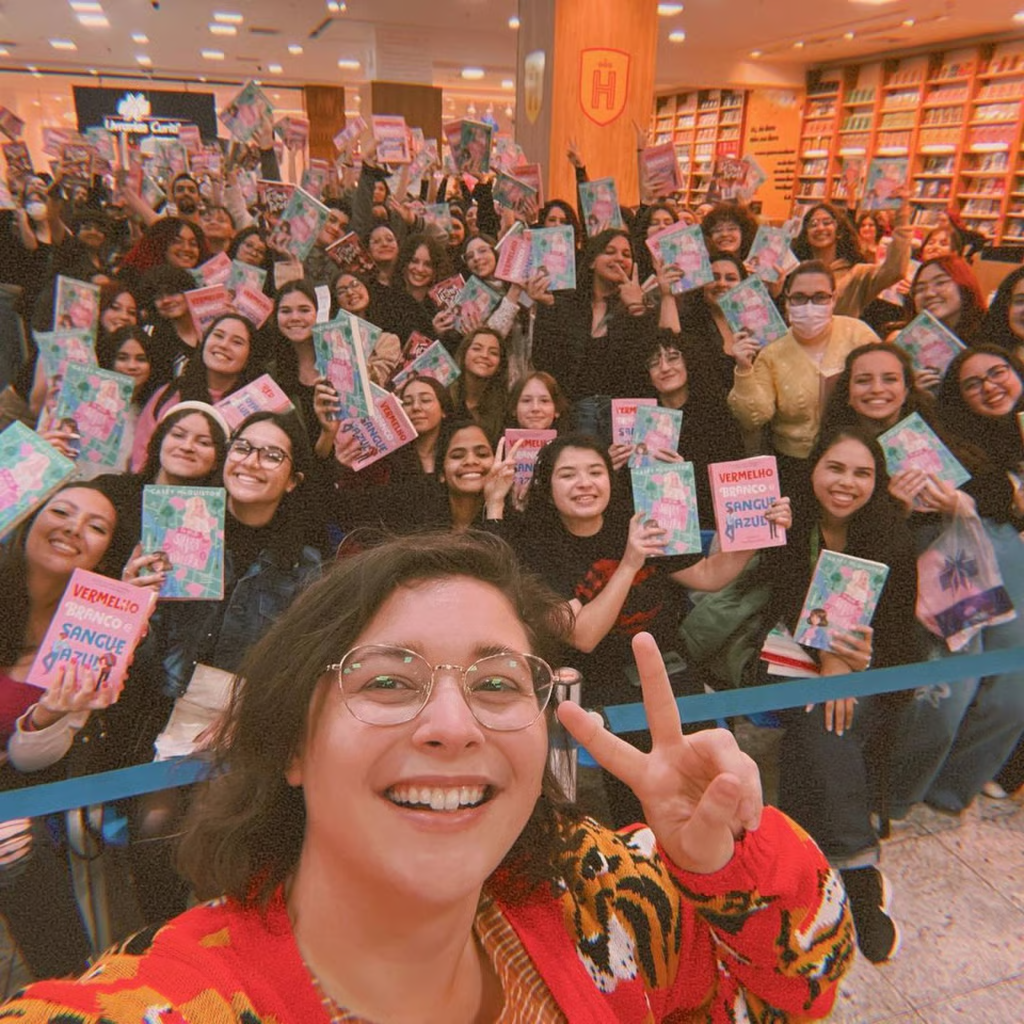
The term fujoshi (literally translating to ‘rotten girl’) refers to women who like to consume media that centers around gay male love stories. It originated in the early 2000s as an insult towards women who enjoy Boy’s Love (BL) anime and manga. The term implied that these women were spoiled due to their obsession with BL and were thus unfit for marriage.
As time has progressed, the term has expanded to encompass gay western media as well. For the sake of this article, BL will refer to any media that centers on these love stories and fujoshi will be used to refer to any woman who regularly consumes this media, particularly in an obsessive manner.
Fujoshis in western society have long been a thing, with early communities forming around ships in mainstream media like Kirk/Spock (Star Trek) and Sherlock/Watson (Sherlock). While this media was not explicitly queer, fanfiction built romantic storylines for these characters outside of the preexisting content.
Entering the mid-to-late 2010s, other major ships picked up steam. Still, even as attitudes towards gay men improved and canonically queer media like Love, Simon gained popularity, the most popular relationships were between two straight men.
This can be attributed to the fact that the mainstream was not truly centering love stories between two men in media, at least not happy ones. Movies like Brokeback Mountain and Moonlight enjoyed incredibly popularity and critical acclaim, but they contained heartbreaking portrayals of internalized homophobia and didn’t exactly show happy endings for either couple.
It was really only upon entering the 2020s that there began to be popular, mainstream media that showed gay men being in love in a non-tragic manner. Shows like Young Royals and books like Heartstopper and Red, White, and Royal Blue (both later adapted on screen) took off.
The main audience of these pieces of media? Women, both straight and queer.
This begs the question: why do women like these stories so much?
Firstly, BL tends to eliminate some of the common problems in straight relationships, functioning as an escape for women. They depict men communicating with each other, being loving and affectionate. They subvert the modern portrayal of male love interests as being oblivious, disinterested, or incompetent. Masculinity is showcased but stripped of its usual toxicities.
Additionally, there is a distinct lack of western Girl’s Love (GL) media that depicts lesbian relationships. The media that does exist often is filled with strife or is catered to male audience’s interests, resulting in queer women turning to BL.
This may seem counterintuitive, as many queer women are not attracted to men. However, both types of medias showcase universal queer experiences: struggles with one’s sexuality, coming out, homophobia, queer relationship dynamics, etc. BL obviously isn’t the same as GL, but it can fill some of the gaps that the absence leaves.
On a lighter note, for women who are attracted to men, there are twice as many men on screen or on page. What’s better than one hot man? Two hot men.
Despite the reasoning behind their engagement, fujoshis are often rewarded with stigma or hate when discussing their interests. The ‘rotten’ aspect of the term is still prevalent in the rhetoric surrounding this group. They are stereotyped as being perverted fetishists that turn the gay community into something to be gawked at for one’s own… ‘enjoyment’.
This is not a good-faith argument or a holistic view of the community.
While, yes, there are fujoshis that take things too far, involving real-life queer men in their fantasies. However, these people a small minority.
There is also the issue of diversity in these shows, which is a huge problem. A vast majority of main characters in popular BLs are chiseled white or east Asian men, which is obviously not representative of the actual gay community. This, while a serious issue, is not exclusive to Bl and is a larger problem that must be addressed in mainstream media.
In reality, fujoshis have a net positive impact on the queer media landscape.
There would never have been a TV show adaptation of Heartstopper if not for the women its creation, if not for the woman that wrote the books and produced the series.
Heartstopper and works like it have had a huge impact on the gay community, both as being a beloved text but also as an accessible exemplar for gay relationships. After a long history of gay men being labeled as sexual deviants, wholesome representation is vital is creating a balanced view of the community.
It seems that currently fujoshis are at an all-time high, with the popularity of shows like the Heated Rivalry adaptation. A small Canadian production that was picked up by HBO max due to the adoration of the majority female fan base, it has skyrocketed to the top of the platform’s most-watched charts. The sheer popularity of the show speaks to the power that women have in dictating which shows succeed and which do not.
Women are a huge consumer base. For decades, their interests have quietly dictated popular culture and the representation it showcases – representation not just in terms of character’s identities, but also the actors that play said characters. With the current conversation regarding which actors should play which roles, queer actors are getting more opportunities than ever. If women stopped consuming BL, opportunities for these actors to play these roles would dwindle once again.
Women drive our culture forward and are necessary when it comes to advancing queer storylines in media. While there are valid critiques to be shared when it comes to fujoshis, much of the noise comes from pretentious gay men letting their misogyny slip through the cracks.
So next time you see a fujoshi (they’re all around you if you know where to look), thank them and beg them to help give the people another gay show to obsess over.
