



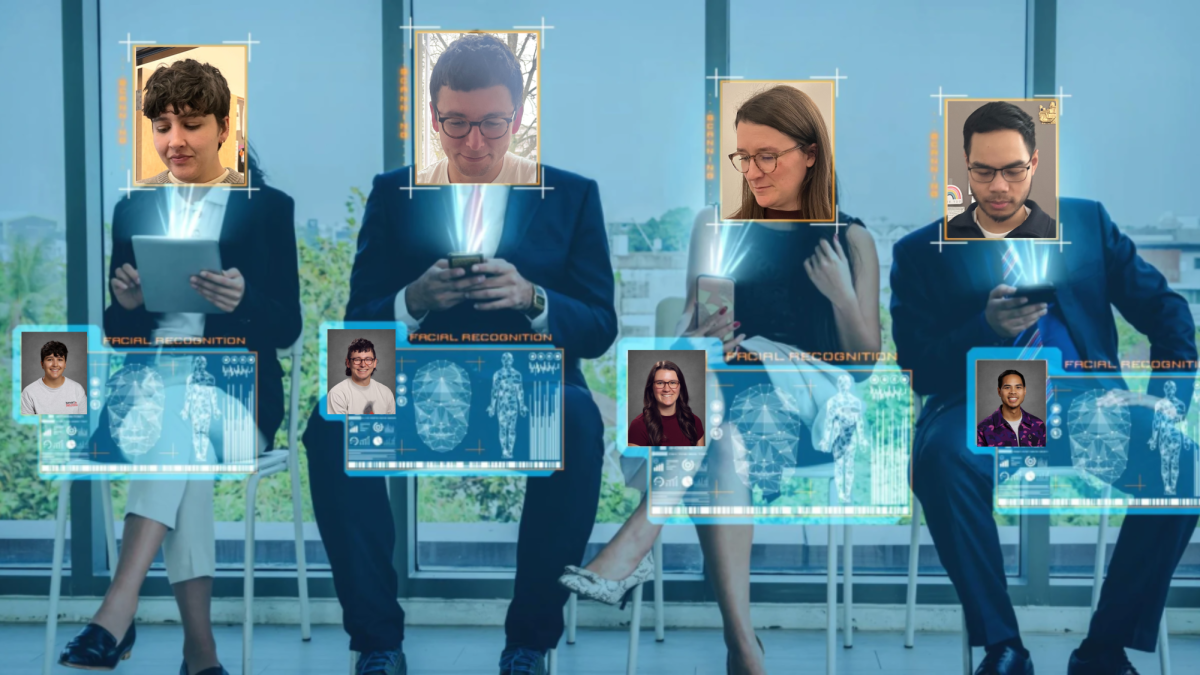
As we transition from school to the workforce, we will interact with recruiters in a completely unexplored manner: AI. Historically, the foundation of workplace recruitment has relied on human engagement and connection; now, it has evolved into automated screening technologies. As workforce competition escalates, so does the use and sophistication of AI at a rapid pace.
How does this work? AI uses existing data to determine if an applicant is eligible for a position by conducting virtual interviews, resume screening, facial analysis, and extensive background checks. However, some warn companies of the potential liabilities that come with algorithmic hiring.
According to the World Economic Forum, nearly 90% of companies utilize some form of AI in their recruitment process. This drastic increase in reliance on AI resulted in skepticism. Some argue that human bias inherently impacts an applicant’s chance at success, while others contend that automated bias from AI enhances already existing biases found in pre-inputted data.
For further insight, I spoke with Bradley Haque, a former lawyer for Quest Software, who suggests “AI may consciously or unconsciously skew towards just replicating the same type of person, which would be a white male college-educated person, as opposed to looking for diversity as well as background and socio-economic diversity.” If AI is going off pre-existing data, which may reflect old pay gaps, race disparity, and historical bias, it is immensely difficult to regenerate that information in a way that doesn’t contain those biases.
This was found apparent in 2014 when Amazon engineers built an algorithm that would review resumés under the pretense that its adoption would make the review process more efficient. However, the algorithm began to penalize female applicants and disproportionately choose male applicants applying for their programs in software engineering, which has historically been an overwhelmingly male dominated field. In a frantic response, engineers attempted to realign the algorithm but found it impossible to be reconstructed, and it was taken down a year later.
Software modules collect their data over years. When prejudice is found in a module, re-curating that data can cost up to millions of dollars.
While others argue that the implementation of AI is reliable and efficient, allowing thousands of applicants to be screened continuously, Haque claims there is liability in this process: “There is tremendous risk for AI to have both bias as well as error in hiring and screening of applicants.”
However, detecting discrimination in algorithmic recruitment can be very difficult because inherent bias is often embedded and can be subtle. This was found by a study published by MIT’s Computer Science and Artificial Intelligence Laboratory (CSAIL) revealing racial bias in AI risk prediction algorithms.
If an applicant believes that they have been discriminated against, they can file a complaint under the Equal Employment Opportunity Commission law (EEOC), which prohibits infringement upon a myriad of anti-discrimination laws such as Title VII of the Civil Rights Act, the Age Discrimination in Employment Act (ADEA), and the Americans with Disabilities Act (ADA).
In response to the rapid implementation of AI in the workplace, Democratic states like New York and California have taken steps toward regulating AI in company recruitment by including algorithmic bias in their discrimination statutes and mandating employers to perform bias audits prior to screenings.
However, the Presidential Administration has signed an executive order into place as of December 11th, 2025, aiming to restrict states from implementing legislation on AI under the argument that state autonomy will negatively impact the advancement of the tech industry. Since the order was enacted, state governors have responded with public criticism, leading us to conclude that movement towards further opposition is likely.
Categories:
The Legal Liability of AI Recruitment
Credit: Morgan Siska
More to Discover



About the Contributor
Amira Willumson, Staff Writer
Amira is a senior at Lincoln and this is her second year writing for the Lincoln Log. She write for the news section on current events. Outside of the log, she love to read, cook and hike!